
Uncertainties over the impact of the United States' (US') tariffs on India, along with the ongoing transmission of past rate cuts, prompted the members of the Reserve Bank of India's Monetary Policy Committee (MPC) to maintain the status quo during the August meeting, the minutes showed. While some of the external members highlighted their concern over growth, the internal members cited the one-year headline inflation rate overshooting the 4 per cent target.

Police on Monday detained a close associate of cleric and Ittehad-e-Millat Council chief Tauqeer Raza Khan in connection with the recent violence in Bareilly during a protest in support of the 'I Love Muhammad' campaign, officials said.

From the Sensex firms, Tata Steel, Eternal, Tech Mahindra, Maruti, Mahindra & Mahindra, Infosys, IndusInd Bank, HCL Tech, Tata Consultancy Services and Bharti Airtel were the major gainers. Telecom operator Bharti Airtel climbed nearly 1 per cent after it posted about a five-fold jump in consolidated net profit to Rs 11,022 crore in the March 2025 quarter, mainly due to the tariff hike impact and one-time gain on tax benefits. However, Asian Paints, Tata Motors, Kotak Mahindra Bank, NTPC and Power Grid were among the laggards.

All the BSE sectoral indices closed in the green. BSE Realty, Auto, Capital Goods and Industrials were lead gainers, jumping up to 5 per cent. IndusInd Bank was the lead gainer among Sensex shares, surging by 6.84 per cent. Tata Motors rallied 4.50 per cent. Larsen & Toubro, Axis Bank, Adani Ports, HDFC Bank, ICICI Bank and HCL Tech were also among the gainers. ITC and Hindustan Unilever were the only laggards.

Retail inflation dipped marginally to a nearly six-year low of 3.34 per cent in March due to a decline in prices of vegetables and protein-rich items. The Consumer Price Index (CPI) based inflation was 3.61 per cent in February and 4.85 per cent in March last year.

In a bid to gain a bigger share of the customer's wallet, banks are ramping up their cross-selling initiatives.

The S&P BSE Sensex dropped 1 points to end at 26,396 and the Nifty50 slipped 2 points to end at 8,109.
While HDFC Bank has vowed to recoup its lost market share in the credit card segment in three to four quarters by aggressively sourcing new cards, brokerages believe it is a little hard to come by, given how competitive the landscape has become, with other players in the market becoming equally aggressive to gain market share. Kotak Institutional Equities in its report on Monday said, "We would like to believe that the recovery in market share is likely to be gradual, if any. "All the key players, including Axis Bank, are now willing to expand their credit card portfolios as they have tested quite well against Covid-19."
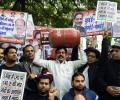
The rate of price rise for food articles stood at 11.51 per cent during January as against 2.41 per cent a month earlier, while for non-food articles it rose nearly three-fold to 7.8 per cent from 2.32 per cent in December, the data released by the ministry of commerce and industry on Friday showed.

The Indian services sector growth touched an 11 month high in July, supported by a pickup in new exports orders and sharp rise in overall sales, a monthly survey said on Tuesday. The seasonally adjusted HSBC India Services PMI Business Activity Index was at 60.5 in July, little-changed from 60.4 in June, and the rate of expansion was the best seen since August 2024.

For FY26, the company has adopted a cautious outlook, anticipating domestic growth to broadly track the industry's low single-digit estimated growth amid ongoing economic headwinds.

The wholesale price-based inflation eased for the eighth consecutive month to 4.73 per cent in January on easing prices of manufactured items, fuel and power. The wholesale price-index (WPI) based inflation rate was 4.95 per cent in December 2022 and 13.68 per cent in January 2022. Inflation in food articles, however, rose to 2.38 per cent in January, from (-) 1.25 per cent in December, 2022.

It is unlikely that the RBI will drop rates until the inflation rate drops below five per cent.

Top gainers in the Sensex pack included ICICI Bank, Infosys, Bajaj Finance and HDFC Bank, rising up to 2.67 per cent.
Deutsche Bank in India has managed to avoid the bad-loan problems plaguing its rivals such as Standard Chartered Plc.

'It was like rigorously preparing for a solid, good exam...' 'I don't know what marks I will get, but I felt the rigorous preparation of an exam.' 'You may sweat, but I feel rejuvenated.'

The wholesale price-based inflation eased to a 29-month low of 1.34 per cent in March on easing prices of manufactured products and fuel items, even though food articles turned expensive.

The Reserve Bank of India (RBI), in its quarterly monetary and macroeconomic review, has expressed concerns on the existing high levels of inflation rate when based on the consumer price index (CPI).

Bankers need to take a call on whether they will allow technology firms to run banks or banks themselves will turn into tech firms, says Tamal Bandyopadhyay.

Retail inflation declined to over six-year low of 2.1 per cent in June, nearing the RBI's comfort zone, on account of subdued prices of food items, including vegetables, driven by widespread monsoon.

The World Bank on Tuesday projected India's economy to grow at 8.3 per cent in 2021 and 7.5 per cent in 2022, even as its recovery is being hampered by an unprecedented second wave of the COVID-19, the largest outbreak in the world since the beginning of the deadly pandemic. The Washington-based global lender, in its latest issue of Global Economic Prospects released here, noted that in India, an enormous second COVID-19 wave is undermining the sharper-than-expected rebound in activity seen during the second half of Fiscal Year 2020/21, especially in services.

Fall in both WPI and CPI inflation to pressure RBI, say analysts
.jpg)
Bank stocks have underperformed in the second quarter of FY'14 with the BSE Bankex declining 18 per cent compared to fall of 1 per cent in the BSE 30-stock index, Sensex, during this period.

Soaring vegetable prices pushed the retail inflation rate to a nine-month high of 5.49 pr cent in September, according to government data released on Monday. The consumer price index (CPI)-based retail inflation rate was 3.65 per cent in August and 5.02 per in September 2023. The previous high inflation rate was witnessed in December 2023 at 5.69 per cent.

Mint Road, on December 21, 2023, flagged the role of self-regulatory organisations (SROs) in strengthening the compliance culture in regulated entities (REs) and providing a consultative platform for policymaking. It also decided to issue an omnibus framework for SROs.
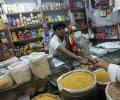
The WPI number follows retail inflation (CPI) data, which had slipped to a record low of 3.78 per cent in July.

Union Finance Minister Nirmala Sitharaman on Tuesday commended Indian financial sector regulators for doing a "world-class job" and bringing greater transparency into the system. Underlining that she is not against questioning or critiquing regulators, Sitharaman said there is a need to be "extremely conscious" about contributions made by them as well. Speaking at the Financial Express Best Banks Awards, the finance minister said, "I strongly recommend that facts are taken on board before we discuss anything to do with the regulators, strictly speaking."
The introduction of more technology platforms has also helped.

From the Sensex pack, HCL Technologies, Infosys, Wipro, Bharti Airtel, Larsen & Toubro, Mahindra & Mahindra, Tata Consultancy Services and Asian Paints were the major gainers. Axis Bank, IndusInd Bank, Bajaj Finance, JSW Steel, State Bank of India and Tata Steel were among the major laggards.

Spiralling prices pinched the pocket of consumer as edible oil, fuel and many other commodities turned dearer this year amid pandemic-induced disruptions but the inflationary pressure is anticipated to ease, though marginally, in the coming months. As consumers, at retail as well as wholesale levels, are willy-nilly learning to live with the new normal of curbs to contain the spread of coronavirus infections, experts are of the view that elevated inflation is likely to stay longer. After dealing with the devastating blows from the second COVID wave, especially during the April-June period, the economy is well on the revival path but the emergence of Omicron might unsettle the recovery trajectory in the short term.
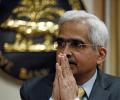
The RBI's rate-setting panel MPC on Monday began its three-day deliberation amid expectations of another round of hike in benchmark interest rates to contain inflation that continues to remain above the central bank's upper tolerance level. RBI Governor Shaktikanta Das will announce the decision of the Monetary Policy Committee after deliberations on Wednesday. Das has already indicated that there may another hike in the repo rate, though he refrained from quantifying it.

The wholesale price-based inflation rose for the second consecutive month in February to 4.17 per cent, as food, fuel and power prices spiked. The WPI inflation was 2.03 per cent in January and 2.26 per cent in February last year. After witnessing months of softening of prices, the food articles in February saw 1.36 per cent inflation. In January it was (-) 2.80 per cent.

Quarterly earnings of corporates, trading activity of foreign investors and inflation data are the key factors that are expected to drive the momentum in the equity markets this week, analysts said.

Only three of India's 45 commercial banks have cut base lending rates since the Reserve Bank of India's surprise easing this month, hurting the government's drive to lift business investment.

Top losers in the Sensex pack include Bharti Airtel, Infosys, Asian Paints, RIL, Coal India, HDFC Bank, HDFC, TCS, ONGC and M&M, falling up to 3.09 per cent.

Tomato prices have been on the boil for more than a month. Data from major cities show that the spike has been between 125 and 150 per cent at the wholesale level. Soaring vegetable prices, including tomatoes, pushed the retail inflation rate to a nine-month high of 5.49 per cent in September, according to government data. Though reports say prices are expected to come down in the next few weeks after supplies improve from Madhya Pradesh and Himachal Pradesh, how long will the respite last is anybody's guess.

In September, JSW MG Motor India, the newly minted joint venture between SAIC Motor, which is present in 100 countries, and Indian conglomerate JSW Group, launched the Windsor, an electric car that introduced battery as a service (BaaS).
After opting for status quo in policy rates, Reserve Bank Governor Raghuram Rajan on Tuesday said any more cut will depend on further transmission of previous rate cuts by banks, softening in inflation and progress of monsoon.

RBI Governor Raghuram Rajan will announce the monetary policy on April 1 and expectations of a status quo are rising ever since the official data on consumer price inflation for February pointed to a cool down to 8.1 per cent.

These 10 stocks represent the best mix of value and growth, offering relatively low price-to-earnings and price-to-book ratios, a high return on equity, and sufficiently high potential from current levels.
